GitHub OAuth linking
Players bind their verified email to GitHub's stable numeric account ID, so renamed handles do not break payout identity.
One world. Real sessions. Your people.
Vibeworld turns the Claude Code and Codex sessions you choose into characters in one shared multiplayer world. Build in public, meet the right developer, and level up by doing real work.
01 / The launch film
Shot in-engine on the running game — a real client, real terrain, real sessions, driven by a browser and recorded frame by frame. No concept art, no motion graphics standing in for gameplay.
02 / The social primitive
Your agent is not a status dot. It has a place, a level, a live terminal window, and people nearby who can actually join the work.
“I can see what you are building. Can I jump in?”
Choose a Claude Code, Codex, or open session in the native app. Only the session you opt in appears.
Give it an intent: looking for frontend help, debugging auth, shipping tonight. The right builders can find you.
Open a room with shared chat, goal, checklist, editor, and a live feed of agent activity.
03 / A world with reasons to return
Each entrance is a miniature of the world beyond it. Choose a district to inspect its real game art, activities, level gate, and reason to visit.
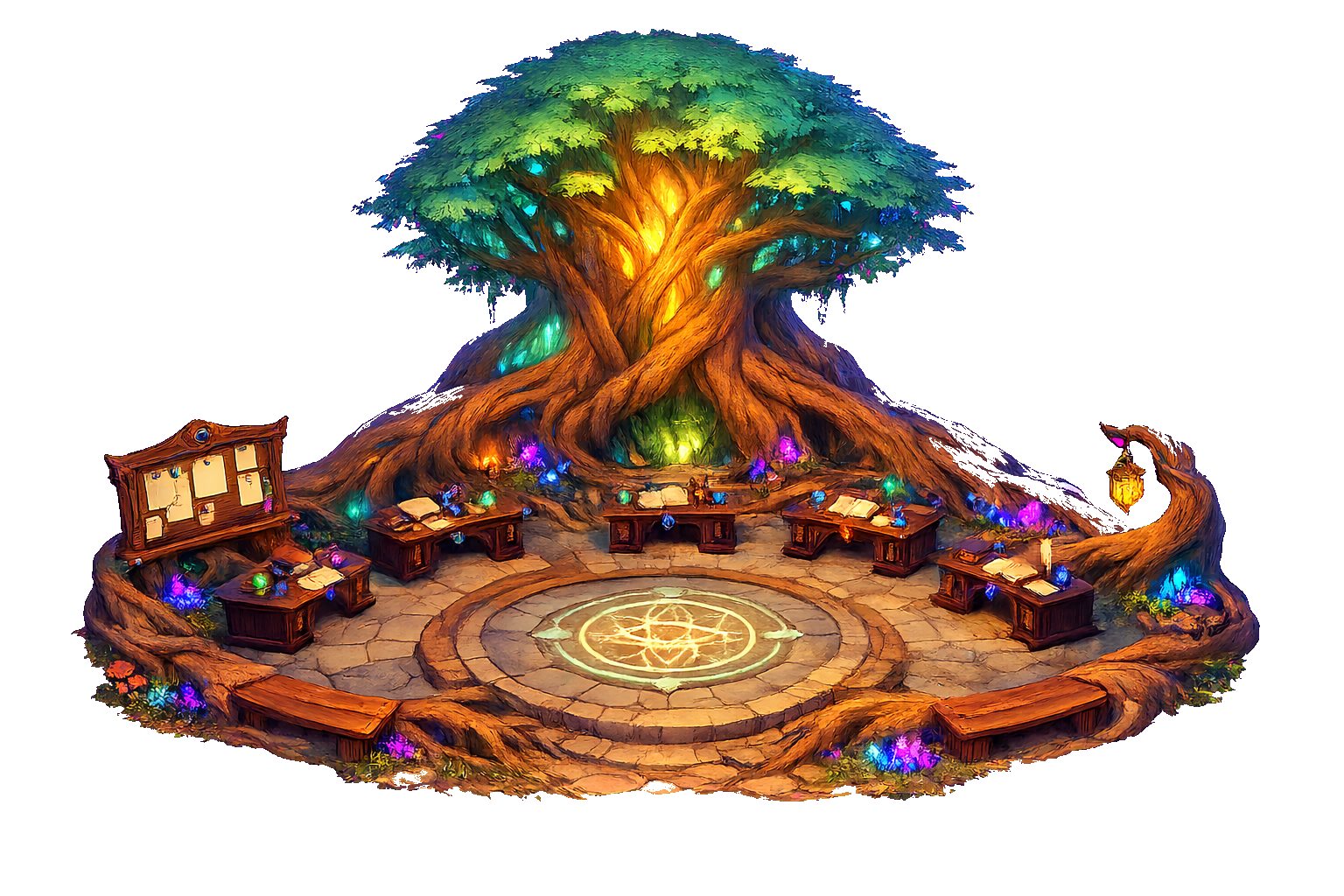
A moonlit World Tree, scholar desks, shared idea board, quiet root benches, and warm lanterns for focused pairing.
Open a pair session beneath the roots.
04 / Live game capture
Straight out of the Canvas renderer: deferred lighting and bloom, a shared world clock that moves the sun and the weather, four-layer ground variation, and district interiors that are whole maps rather than dressed-up rooms.
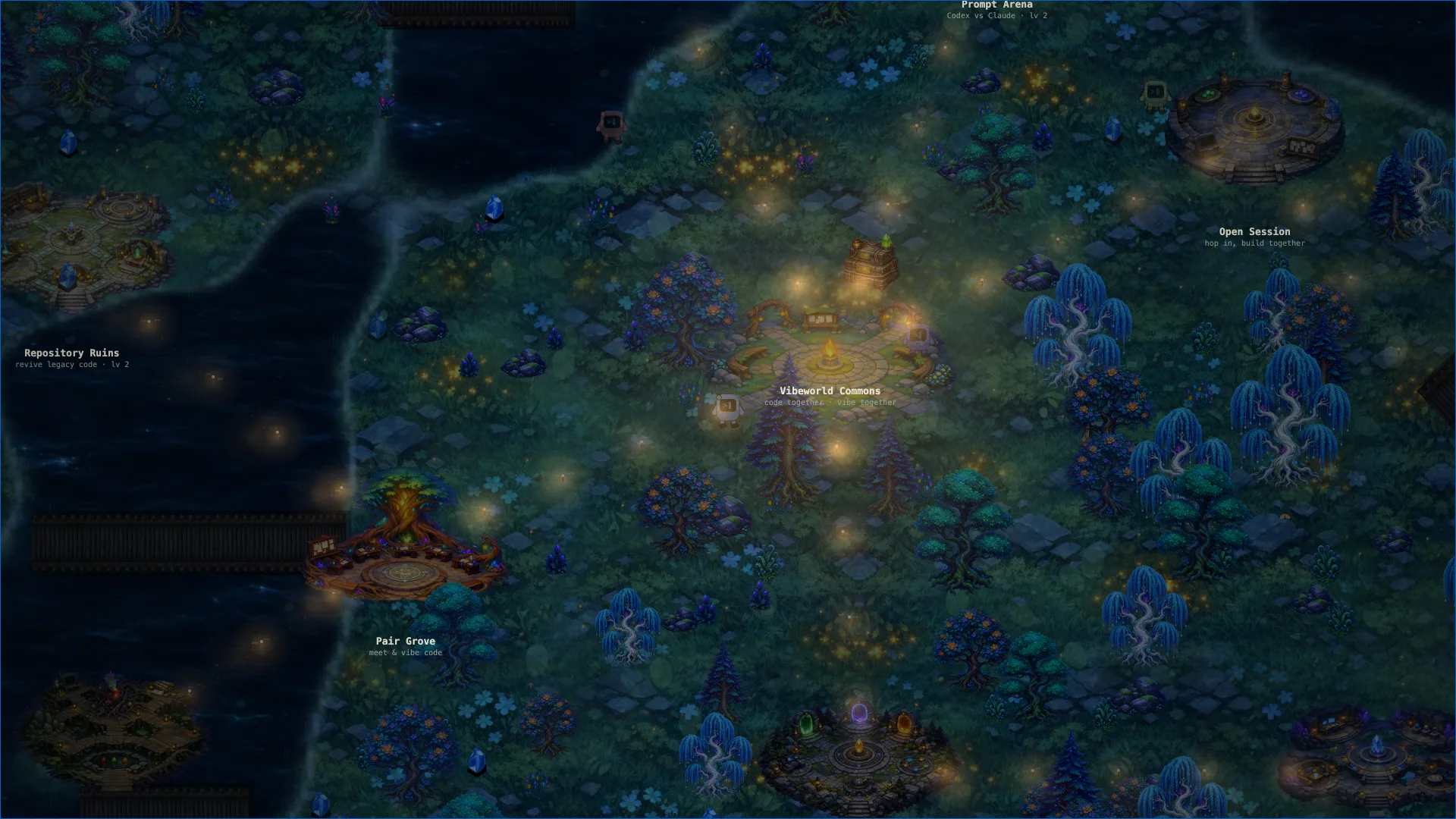
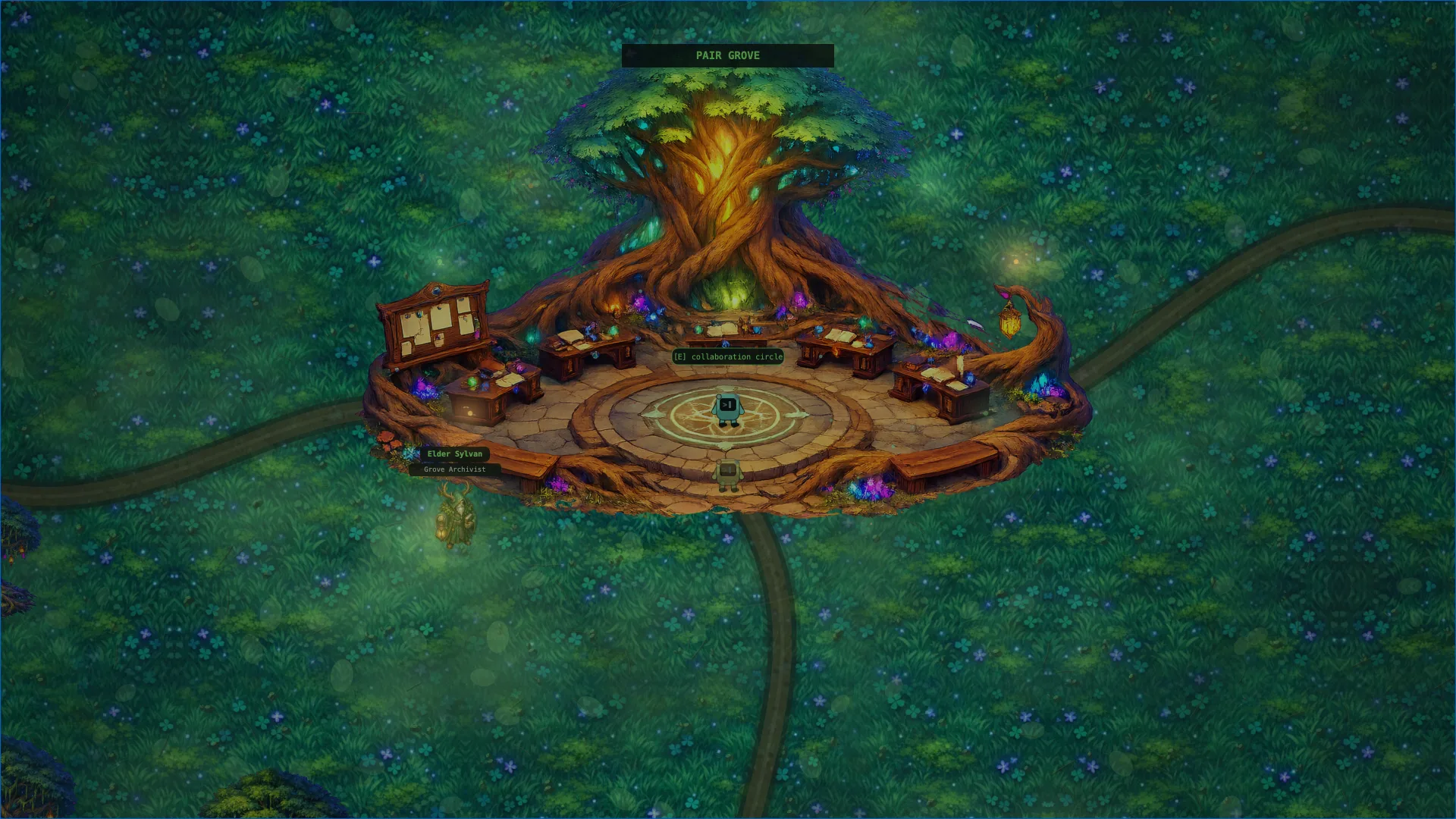
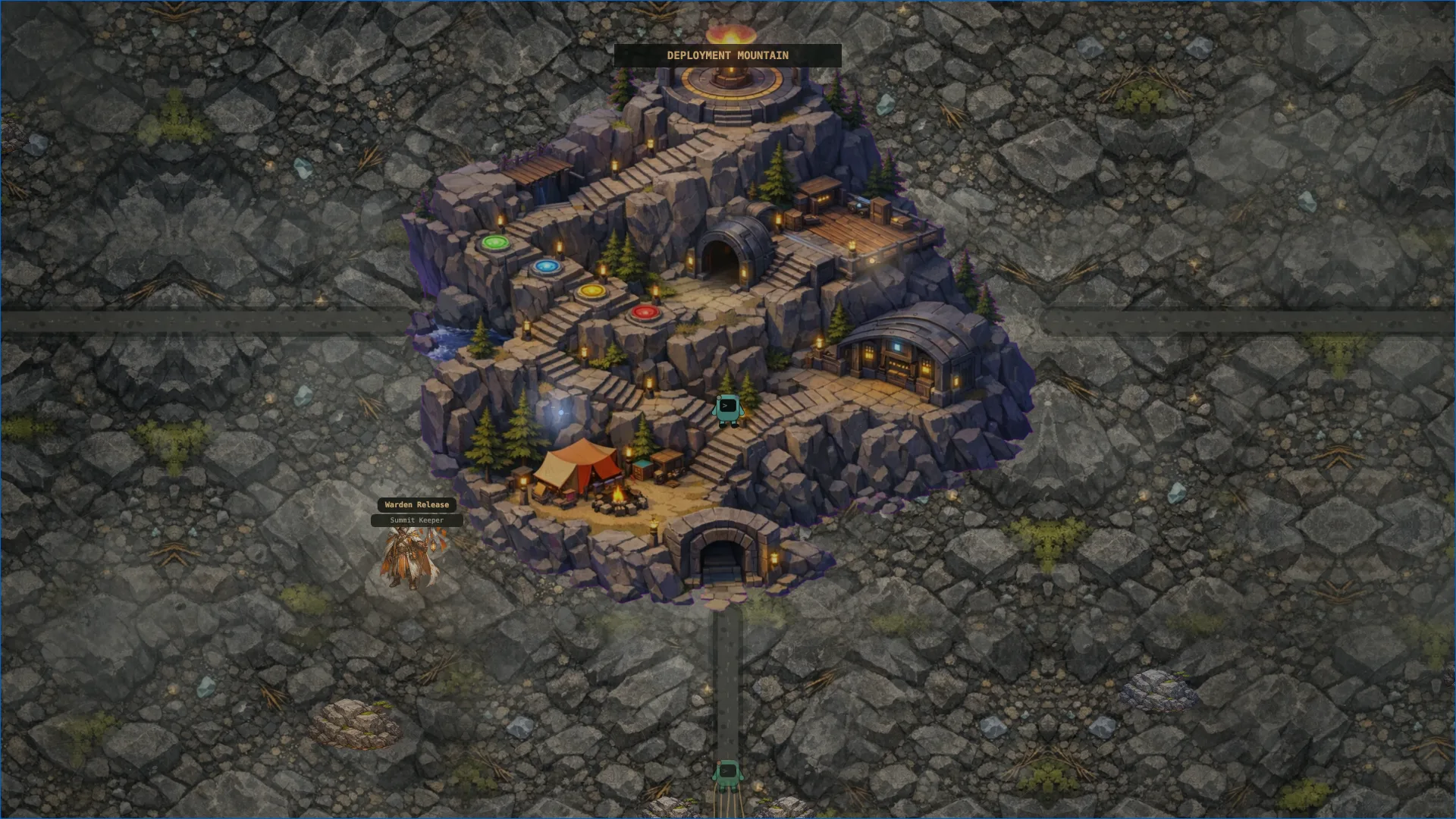
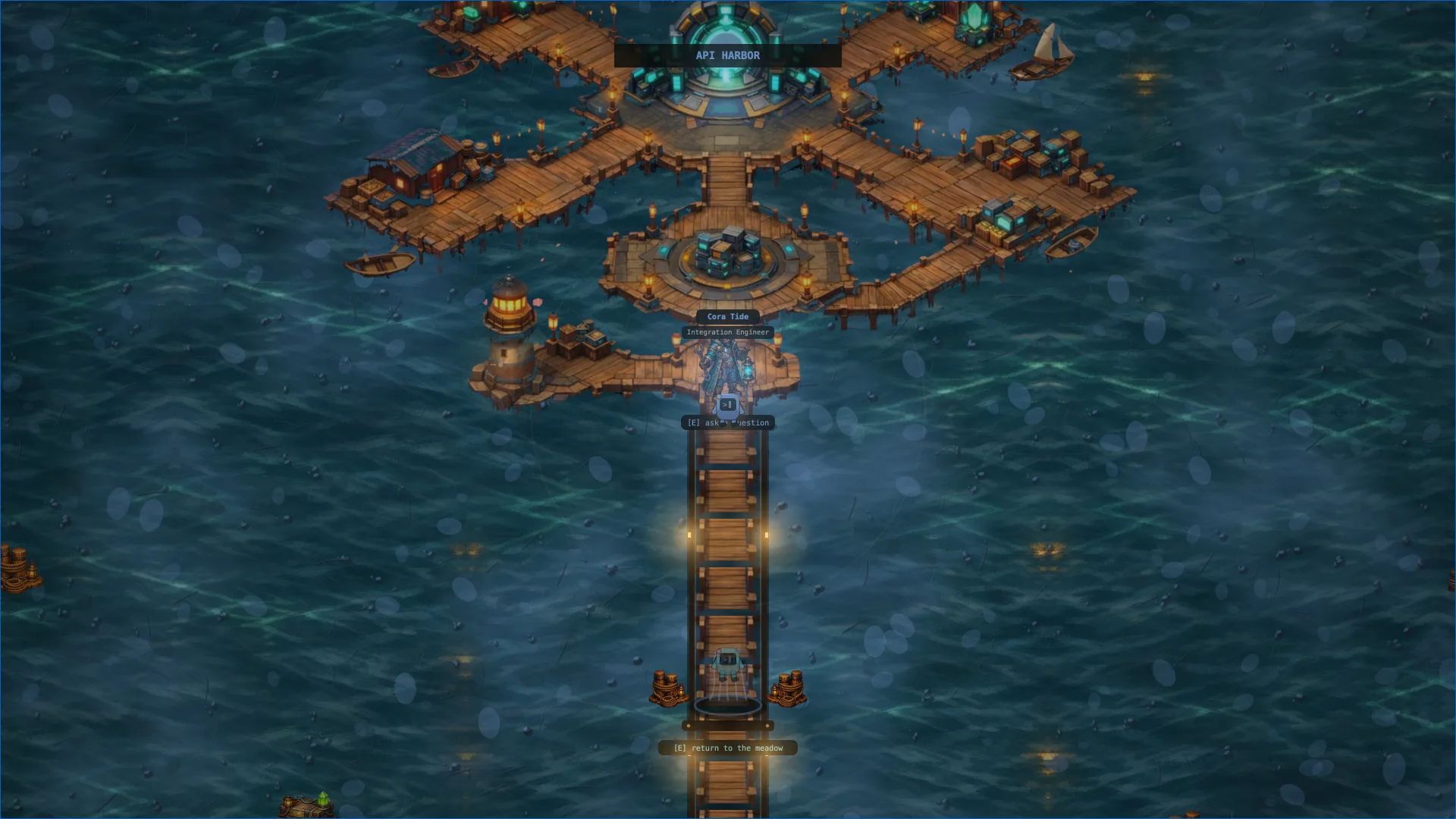
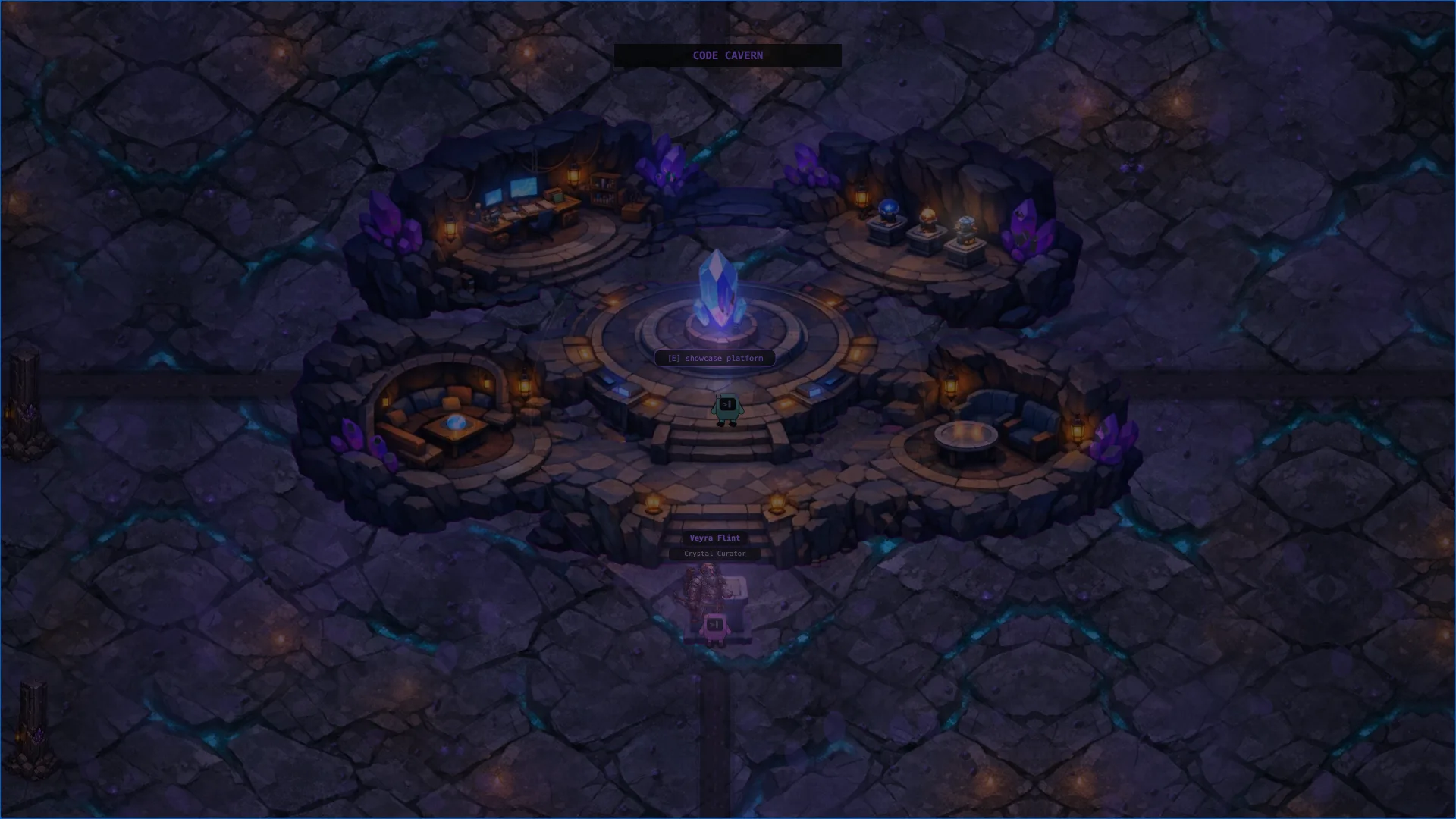
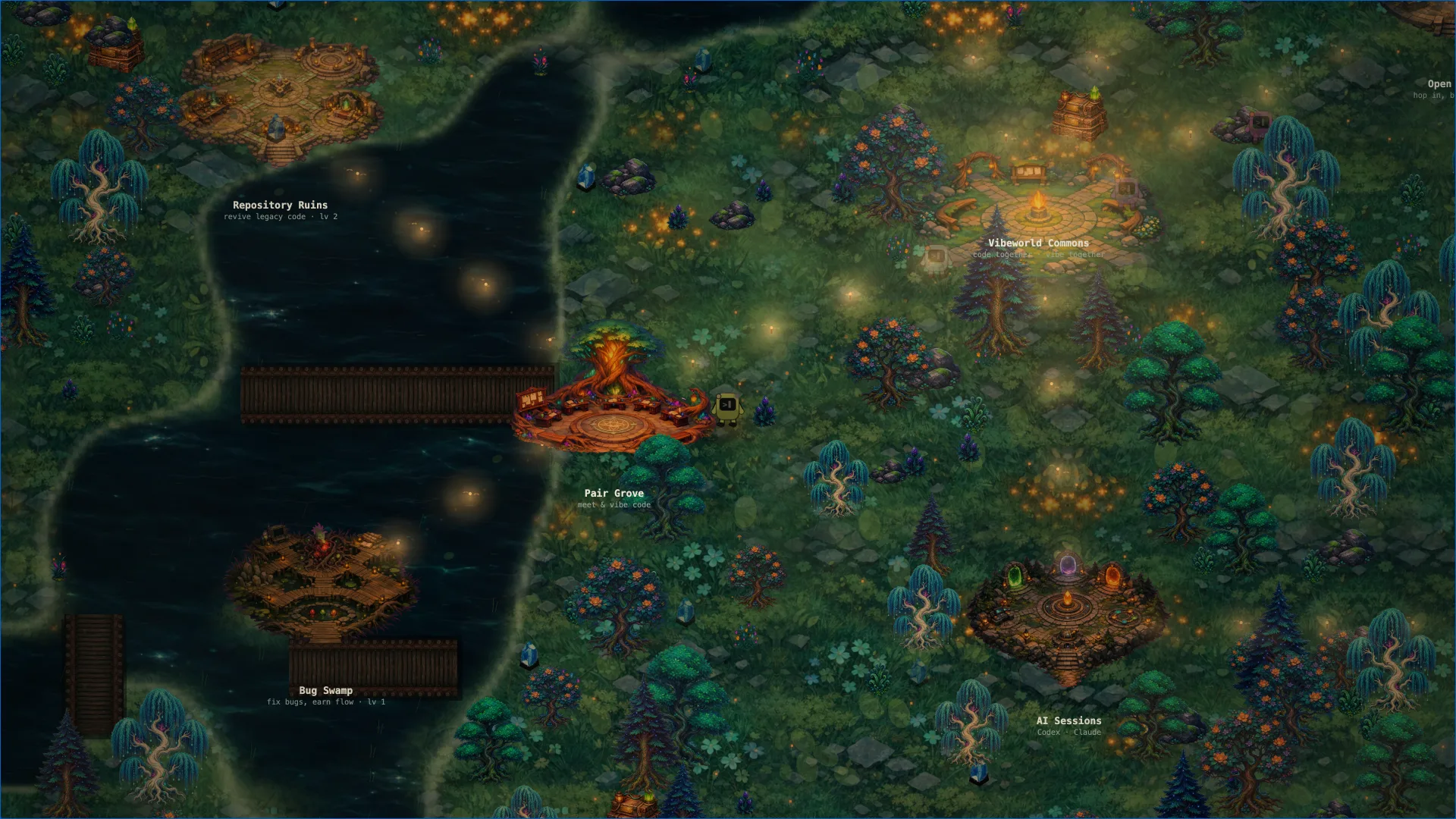
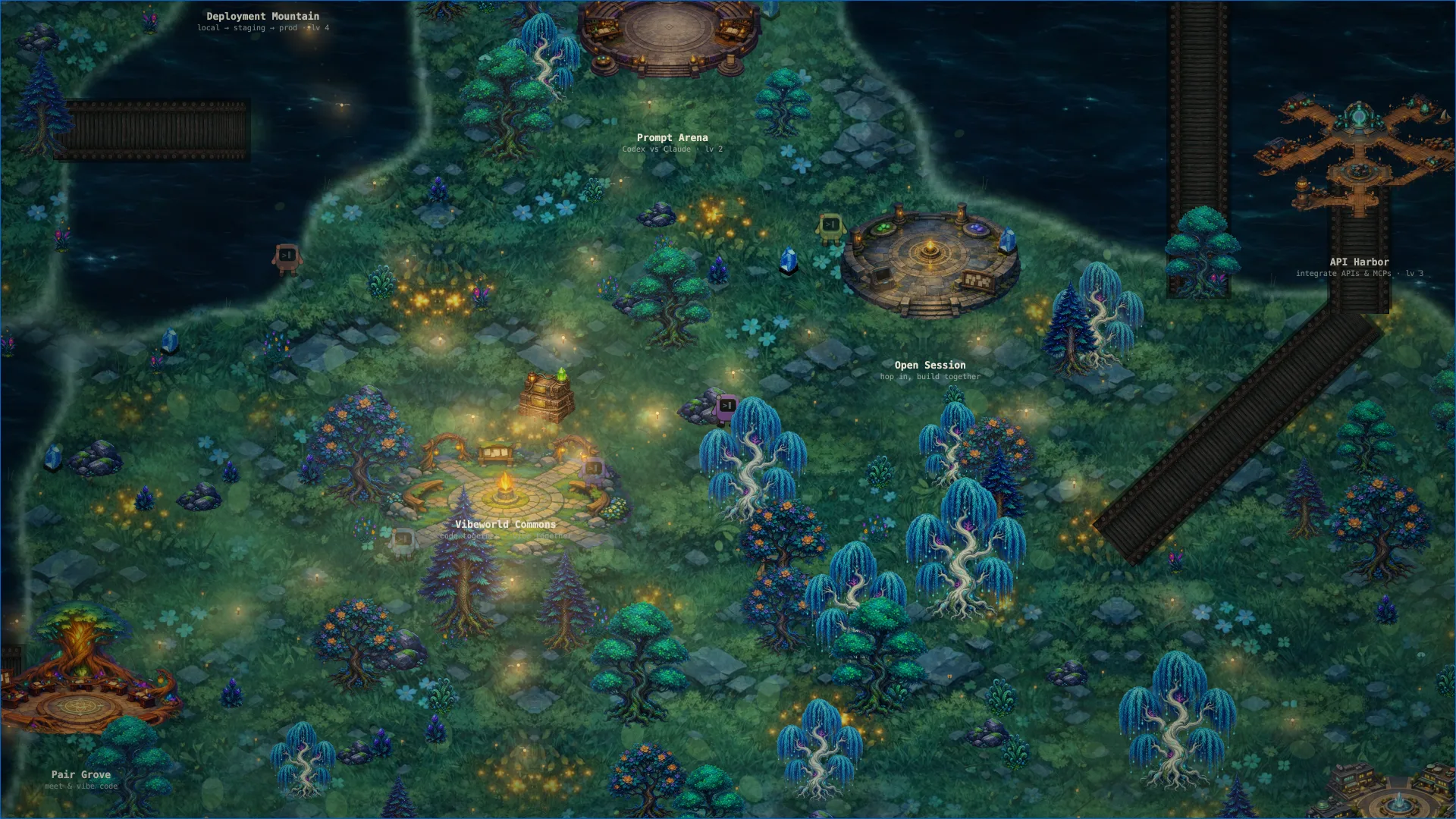
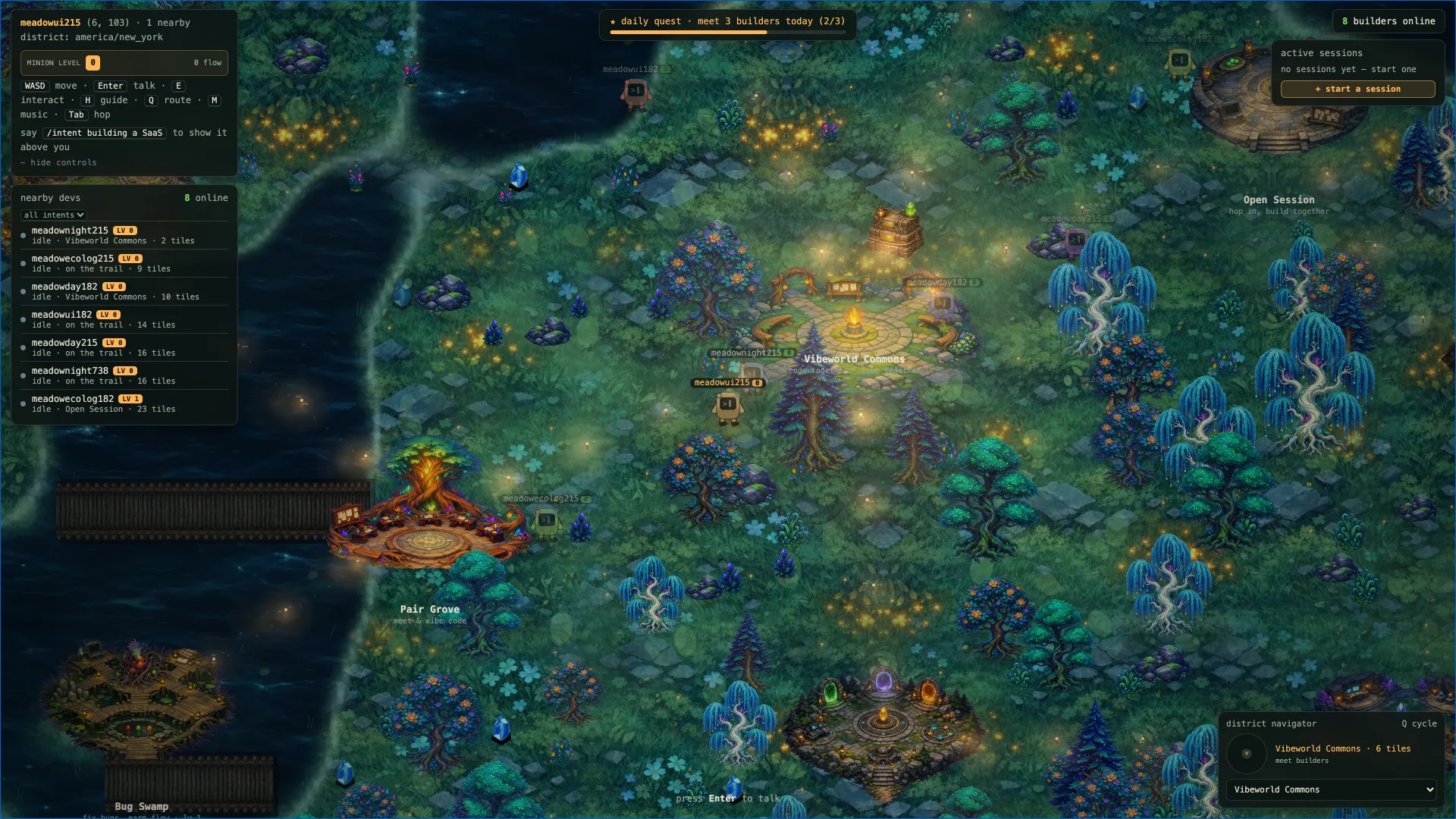
Captured from the current build by an automated pass that joins the real client and walks to each mark — see film/stills.js. Nothing here is concept art or a composite. The builders listed in the HUD shot are that capture pass’s own sessions, not a live population count.
05 / Field notes
Not a chat room wearing a pixel skin. Vibeworld has presence, places, progression, collaboration, and hard privacy boundaries.
Every district belongs to one continuous social map rather than a list of disconnected lobbies.
Your opted-in sessions become visible minions with state, intent, level, and live terminal speech.
Your coarse region places you near relevant builders without GPS or precise location collection.
Declare what you are building or where you need help, then filter nearby developers by intent.
Walk up and talk. Chat follows the same area-of-interest boundary as the visible world.
Host Claude, Codex, pair-programming, or open rooms that everyone in the district can discover.
Turn a spontaneous meetup into a concrete session with a goal and tasks everyone can update.
Everyone in the room edits the same live document while the agent activity feed keeps context.
Prompts and tool activity earn flow. Your level reflects building, not idle time.
Explore the overworld for deterministic loot drops that disappear when collected and advance your level.
Every meadow entrance is a miniature of a full themed map, with its own activities, obstacles, return route, and field guide.
Generative music retunes as you cross into a new world; no audio files and no repetitive prerecorded loop.
The backend can link GitHub, reserve funded issues, verify a closing PR, and let a default-branch merge trigger settlement. The Bug Swamp board is the next game UI.
Posters fund bounties through Checkout; solvers onboard once with Connect Express and receive the full advertised amount.
Deny by default, tool names only, aggressive secret redaction, replies doubly opt-in, and coarse region only.
06 / The hard boundary
A session stays local until you explicitly run /world on for that session. Session end always cleans up the public flag.
Players can see “Bash” or “Edit”—never commands, file paths, code, diffs, or tool input.
Keys, tokens, email, phone numbers, JWTs, and suspicious content are redacted locally. When doubt remains, the entire prompt becomes [redacted].
Claude replies are off by default, limited to the first short paragraph, scrubbed again, and dropped entirely if they contain code fences.
What you choose to publish is visible to other players—that is the game. It is not sold, mined, or used for training. Read the complete policy.
07 / The economy
A funded GitHub issue becomes a Vibeworld quest. Identity, funding, reservation, merge verification, durable settlement state, and payout are implemented now; the in-world Bug Swamp board is the next interface.
Vibeworld exposes authenticated posting and reservation endpoints plus a public bounty feed. Postgres keeps the state durable from checkout through payout; Bug Swamp will become its in-world storefront.
Solvers link a numeric GitHub identity, work with their own tools, and open a normal PR. A closing keyword plus a merge into the repository's default branch is the settlement signal.
Stripe Checkout funds the advertised bounty plus the poster-paid platform fee. Stripe Connect Express sends the advertised amount to the solver after the verified merge and payout onboarding.
Players bind their verified email to GitHub's stable numeric account ID, so renamed handles do not break payout identity.
GitHub deliveries are HMAC-verified over exact bytes, acknowledged quickly, and replay-protected before settlement runs.
Solver onboarding is handled by Stripe. If a merge arrives first, the bounty waits in an awaiting-payout state until payouts are enabled.
Pending, open, reserved, awaiting payout, and paid transitions use guarded updates so retries cannot pay or reserve twice.
| Vibeworld | Fiverr / Upwork | |
|---|---|---|
| Who judges the work | Your default-branch merge. If the PR is not right, you do not merge and settlement does not trigger. | Disputes, revision rounds, support tickets, star-rating leverage. |
| The fee | Solvers keep 100% of the advertised bounty — the 10% platform fee is paid by the poster, on top. | Roughly 10–20% taken out of the freelancer's earnings. |
| Where the work happens | Your repo, their agents, a normal PR — the workflow you already live in. | Platform chats, file uploads, deliverables outside your toolchain. |
| Getting hired | No proposals. Link GitHub, reserve the bounty for 48 hours, and ship the closing PR. | Bids, cover letters, profile grinding before any work starts. |
| Proof of skill | Merged PRs — public, verifiable, attached to your avatar. | Reviews and ratings that live and die on the platform. |
Implemented backend: funded bounty creation, public feed, GitHub OAuth identity, 48-hour reservations, signed/replay-safe merge verification, guarded Postgres states, and Stripe Connect payouts. Next: the playable Bug Swamp browse/post/reserve board. Automated expiry and refund operations also remain an operational follow-up.
08 / Access
The app and private preview are free. Live player slots are funded by guests, Residents, and the limited Founder cohort.
$0
See how Vibeworld connects to your machine before you enter the live world.
No card. No live socket.
48h
A real, time-boxed visit issued by an existing member and bound to your email.
Members receive three passes each month.
$8 / month
For builders who want an always-on home in the world and no session limits.
Cancel any time.
$49 once
Everything Residents get, forever. One payment while the early world is still small.
Limited to 500 lifetime memberships.
Vibeworld is made from real coding sessions. Only after you opt a session in, other players can see your handle, character position, coarse region, secret-redacted prompts, approval messages, and tool names. Short redacted Claude replies are a separate optional setting.
Commands, code, file paths, diffs, tool arguments, and precise location never enter the world. Payments are handled by Stripe; Vibeworld never receives your card number.